

Carvings
Although work is in progress this page is still under construction.
Take a look at our collection below:
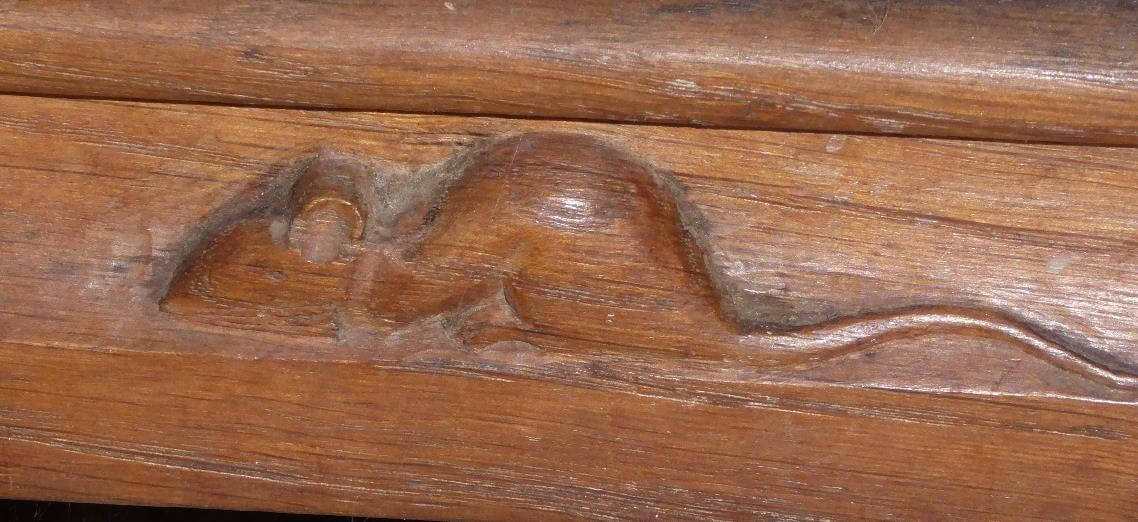
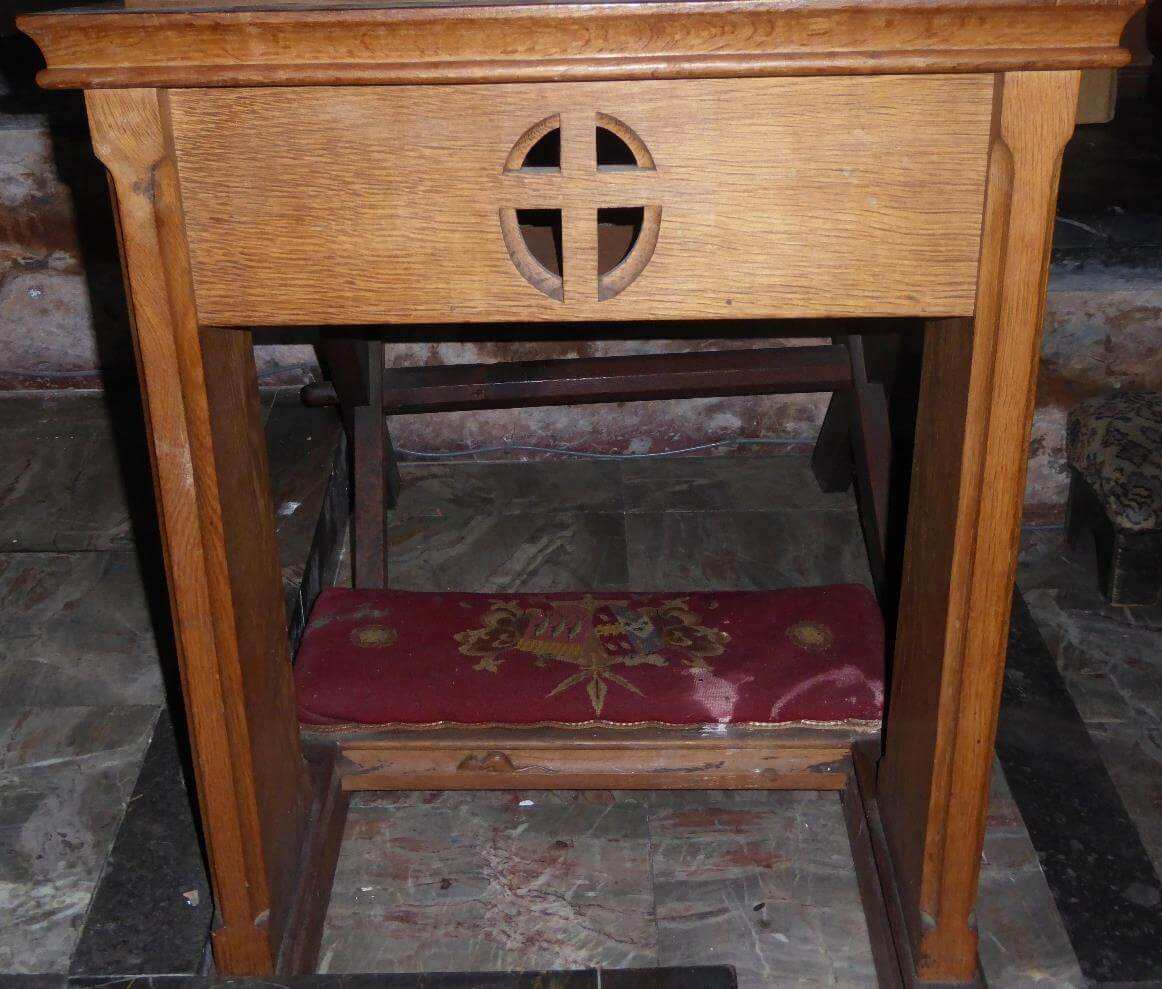
The Rector’s Stall
The Rector’s stall or kneeler is sited on the south side of the chancel area. It is distinctive as it was made by Robert Thompson (1876-1955) of Kilburn, Yorkshire, a British furniture maker. He was renowned for signing his furniture with a little mouse, which gave him the title “Mouseman”. It is said that the little mouse idea came from a discussion he had with a fellow worker in 1919 when Robert commented that “he was as poor as a church mouse” and from that time he included one in all his work. The kneeler is made from oak and was given in memory of Mrs C. Bell.
The Rector’s Stall
Bishops chair
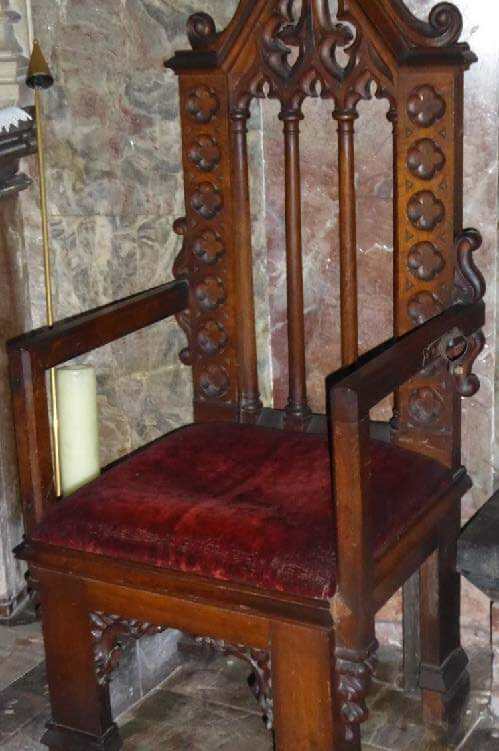
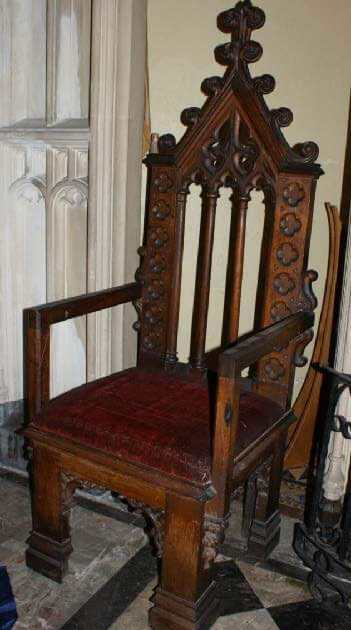
Although the original Bishop’s chair is red Petitor marble and attached to the north wall of the apse, there are two carved high backed chairs which, because they are portable, are used to seat the Bishop on a visit to the church (for licensing of clergy or confirmation). The Bishop’s chair is then usually placed in the centre of the dais in a position of honour.
Originally the Bishop’s chair was called ‘Cathedra’ (from the Latin meaning chair or seat), and was sited in a cathedral or church on the wall of the apse behind the altar. When a Bishop takes up their office they are enthroned, so the seat was seen as a throne, a seat of power and authority.
Unfortunately at the present time we have no knowledge as to the craftsman who carved these chairs nor to the benefactor who gave them.
Choir Stalls
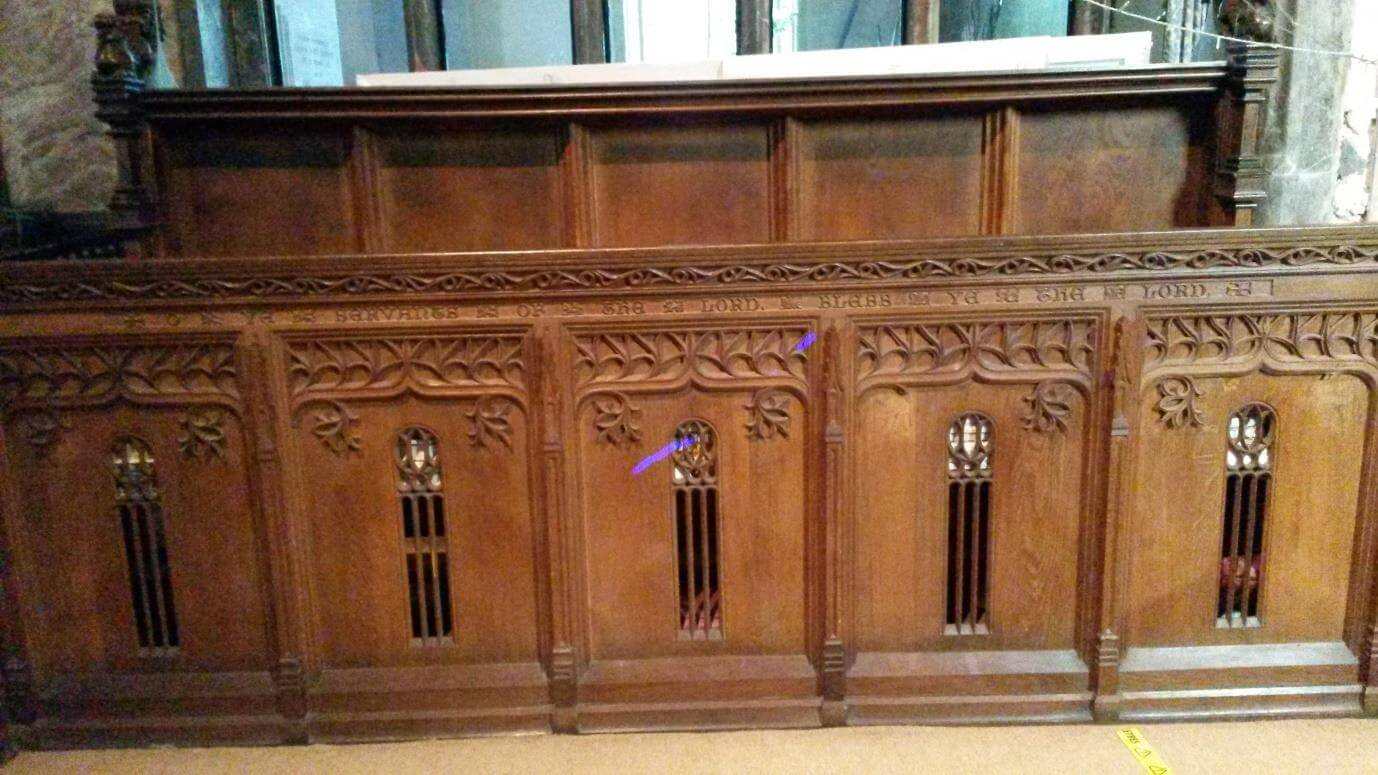
The men’s choir stalls at the back date from the 1880s when the chancel was remodelled, originally there had been two rows of open desks as that had been all that could be afforded at the time.
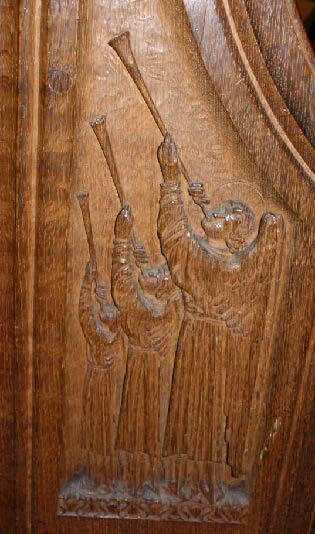
In 1926 Mr C. Luxmoore donated the boys’ stalls in front, they are of carved oak and designed by Sir Giles Gilbert Scott. They are beautifully carved and on each end are surmounted by an angel.
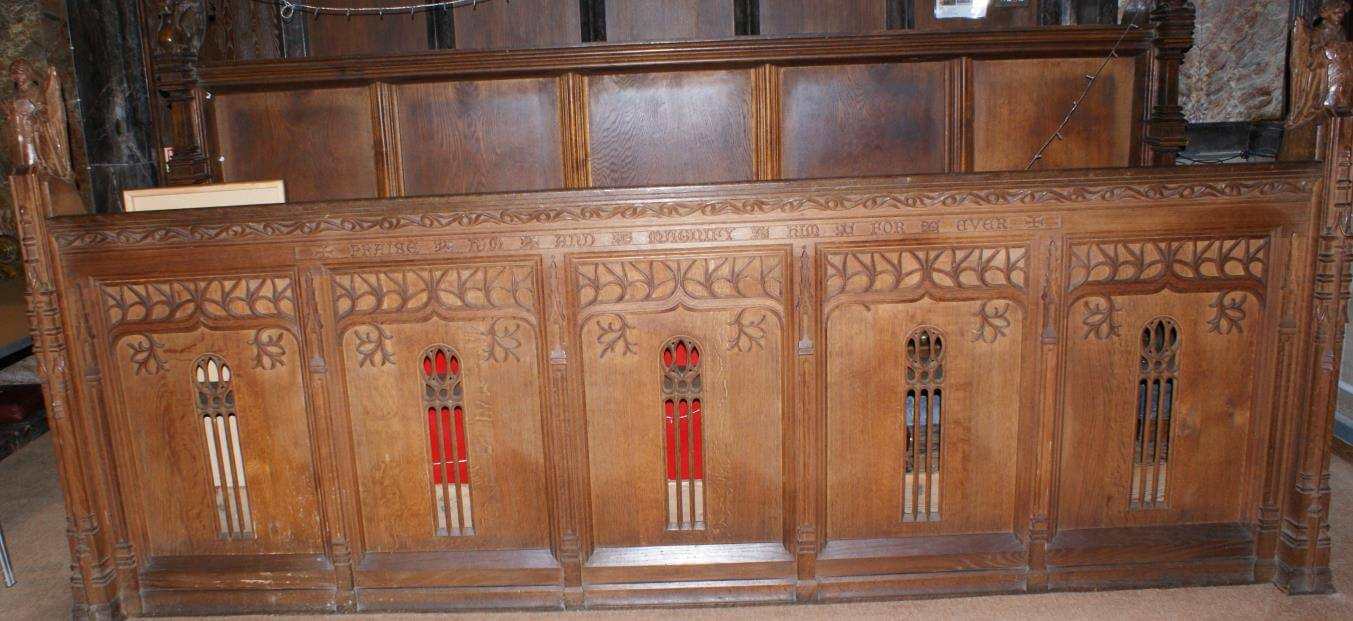
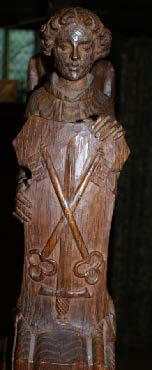
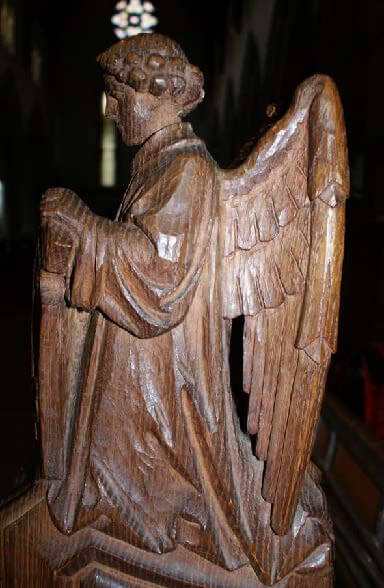
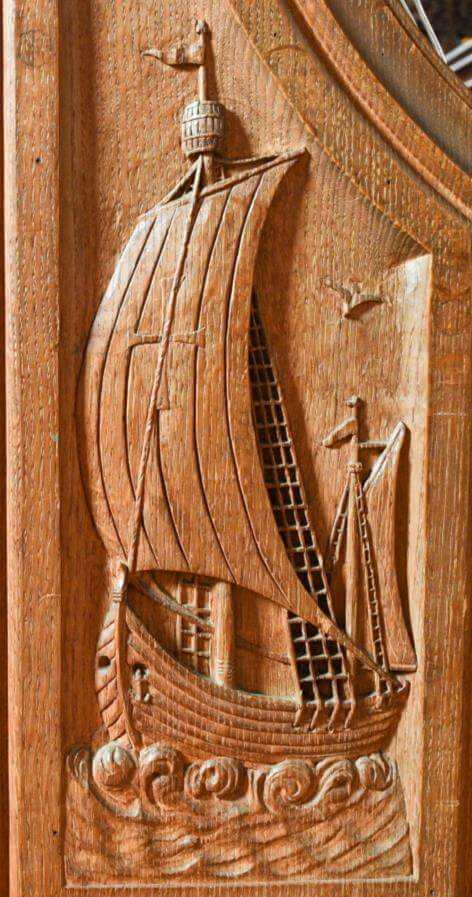
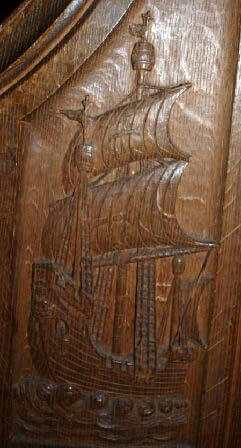
Angel North East, front and side with ship design on side of pew
Angel on the North West, front and side with a different ship design on pew side
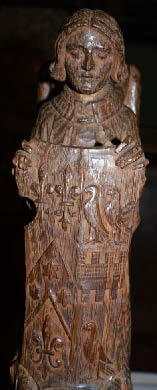
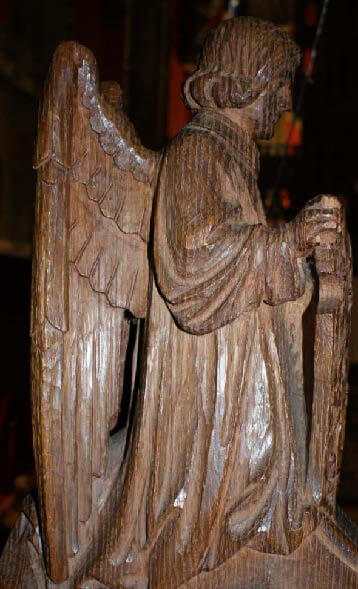
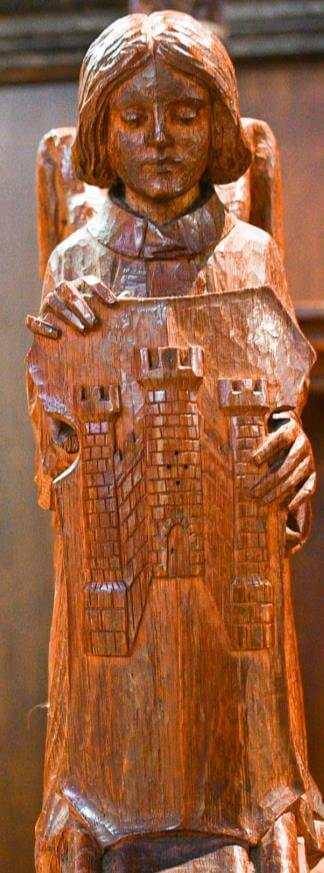
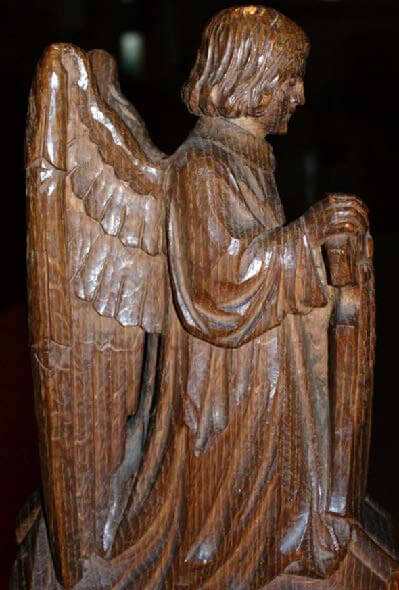
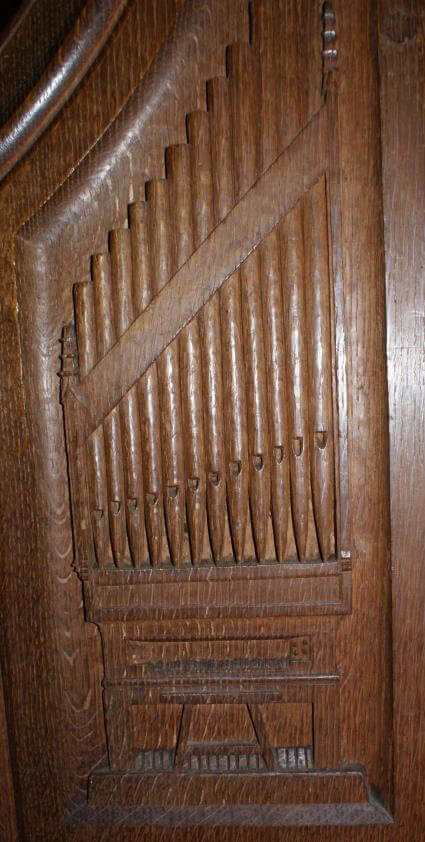
The angel of the South East, front, side and with organ pipes on the side of the pew.
The angel on the South West, front, side and angels playing music on pew side
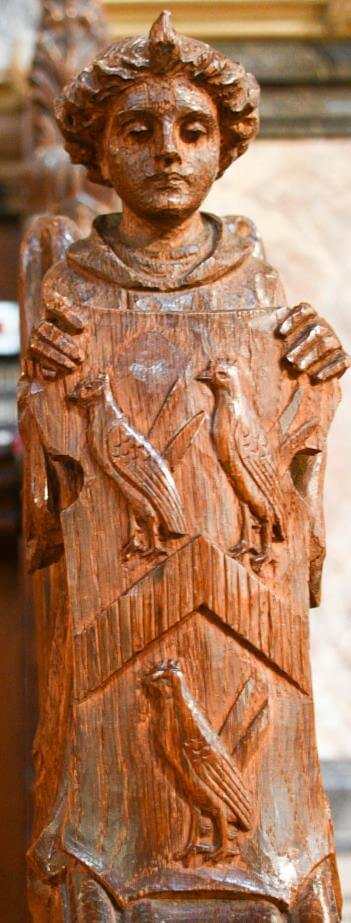
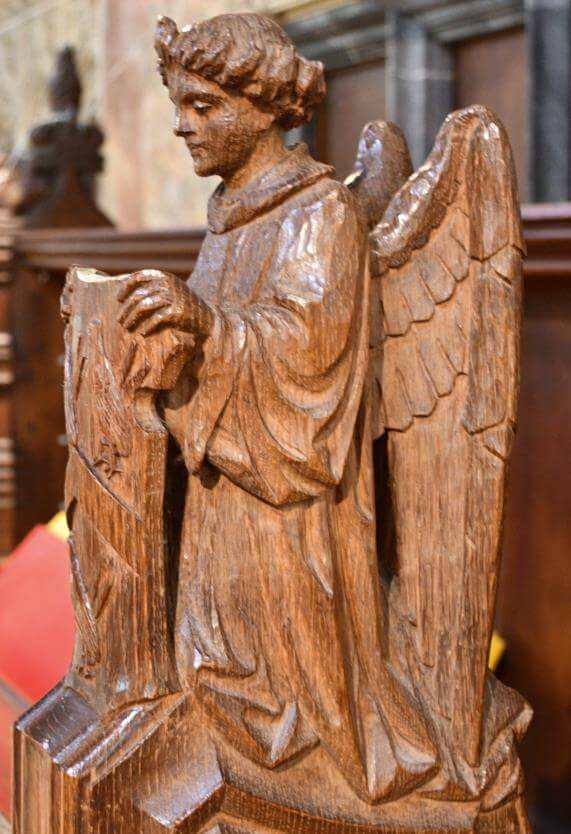
The Poppyheads
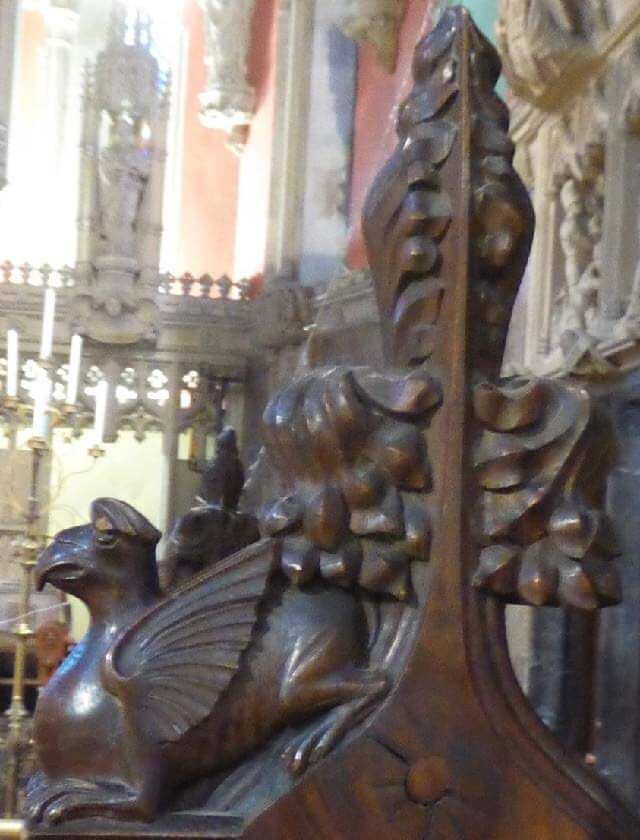
The ends of pews in the nave and also the men’s choir pews have carved poppyheads, this name is not related to the poppy flower but comes instead form the Latin puppis meaning the poop or figurehead of a ship.
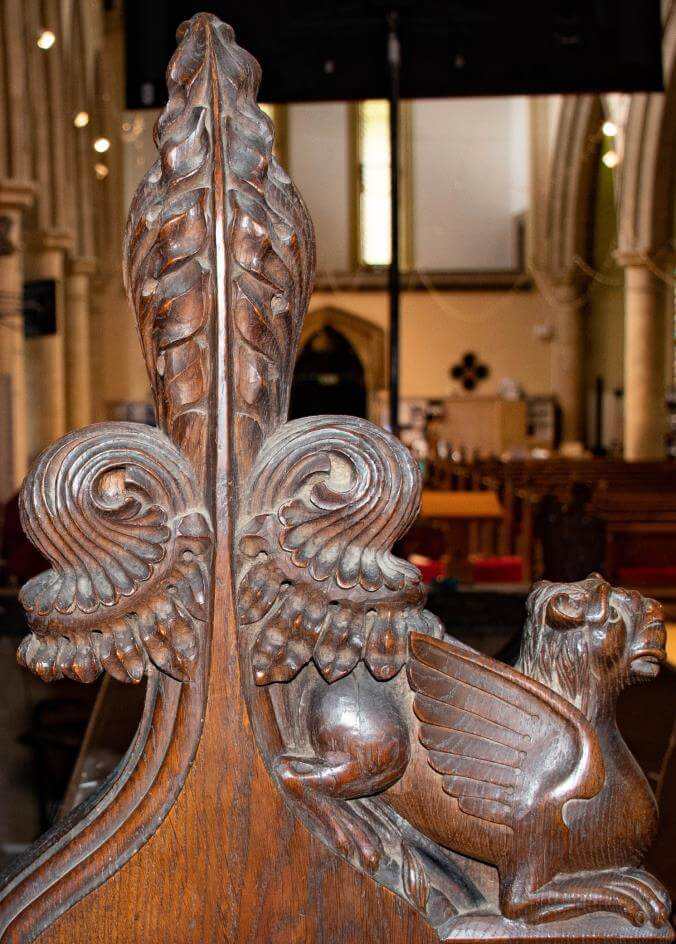
The griffin, the body of a lion and the head and wings of an eagle, carved in front of the poppyhead on the men’s choir stall symbolises Christ. It represented power and strength and the union of the ruler of the sky (eagle) and the ruler of the earth (lion), thereby showing the two natures of Christ as Lord and King, His divinity from above, but also His being from the earth, fully man.
Poppyhead and griffin on the south west choir pew and (side) on the south east end of the pew.
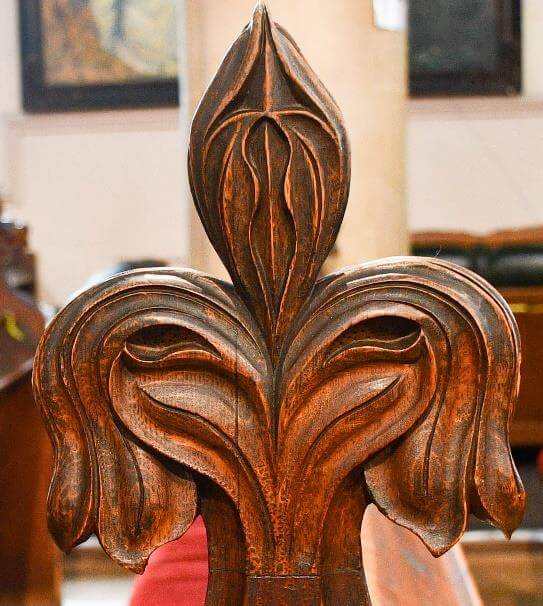
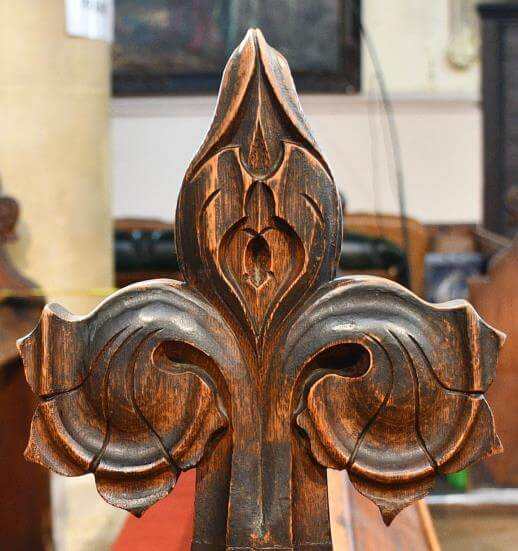
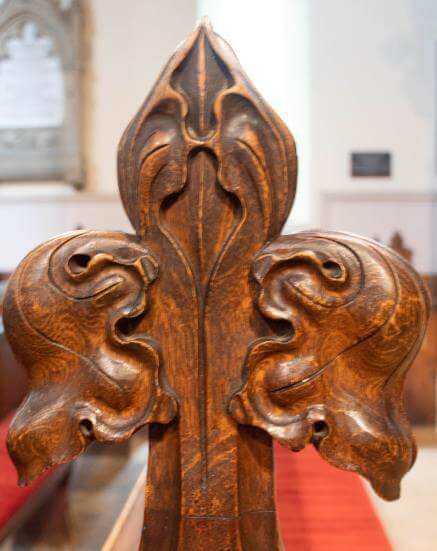
They are in the form of stylised fleur-de-lys and vary in appearance around the church.
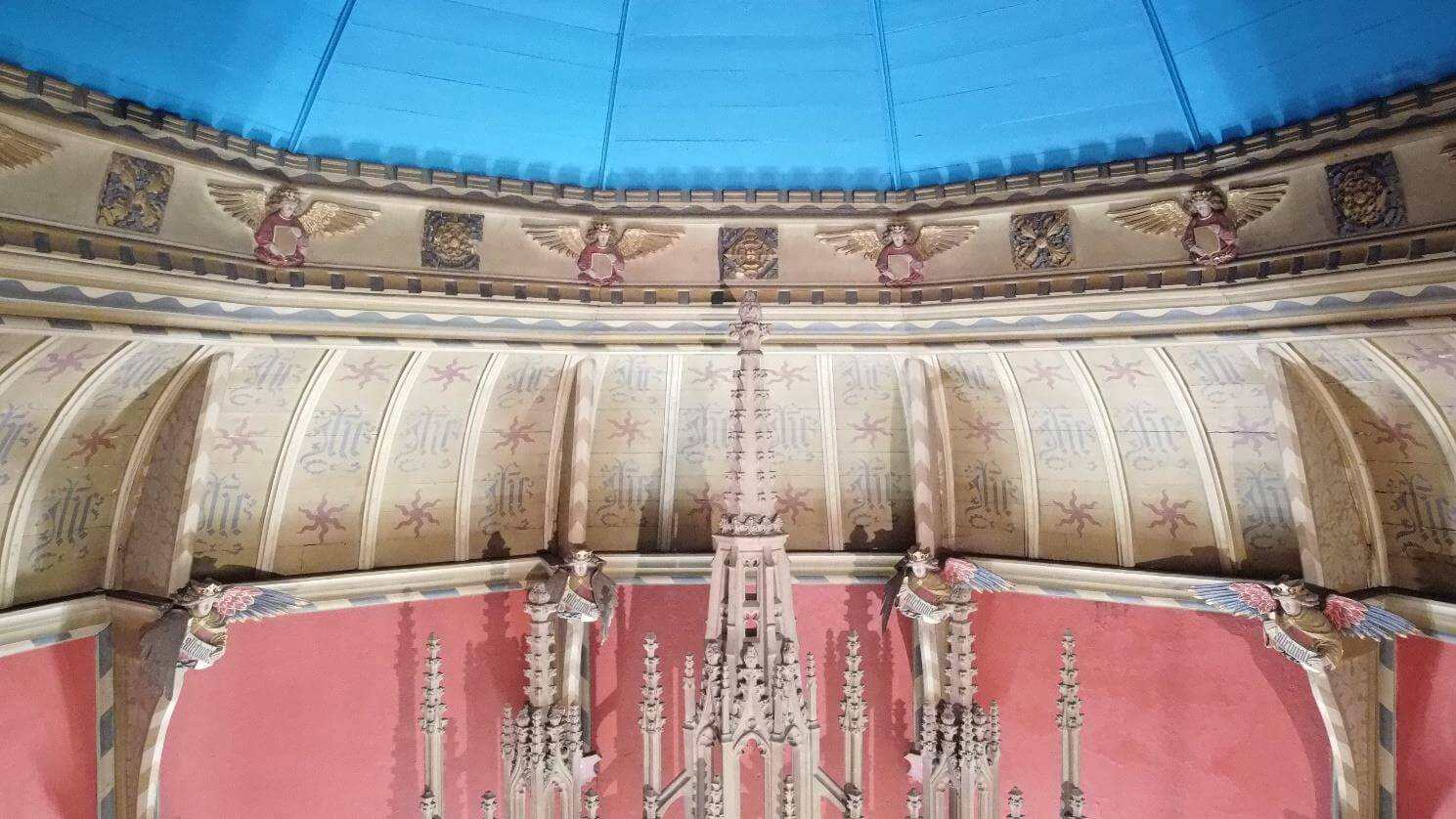
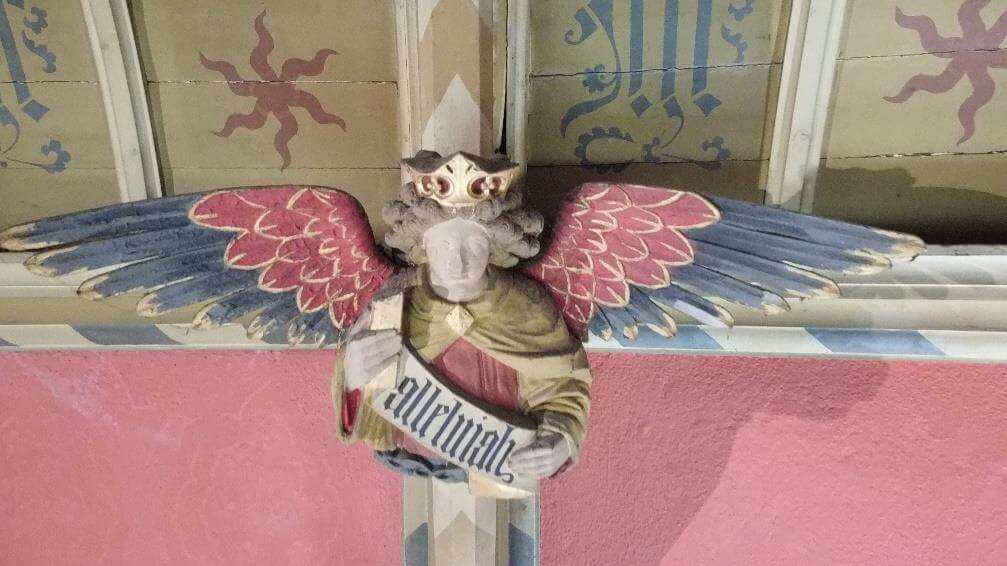
The ceiling of the apse also has some carvings which have been painted. There is a castellation surmounting the decorative work and eight roof brackets on which are positioned a painted angel with outstretched wings holding a scroll having the words ‘Alleluiah’. (a variant spelling of the more usual alleluia)